Last reviewed 19 September 2026 · Sources checked on the publication date
An estimated delivery time helps you plan, but it is not the same as a guaranteed arrival time for every transfer. A payment from Germany to Nigeria can pass through several stages before the recipient sees it. Knowing which stage is delayed makes it easier to decide what to do next.
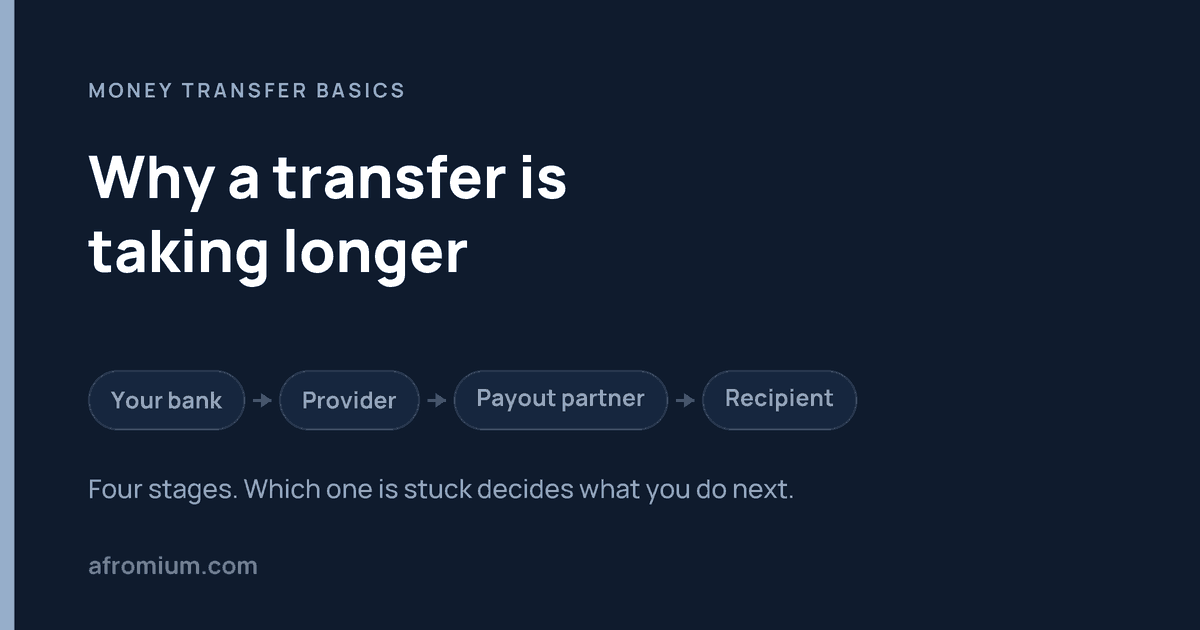
The three stages to check
First, your payment must reach the transfer provider. If you funded the transfer from a bank account, the provider may still be waiting for that payment. Second, the provider processes the transfer, including currency conversion and any required checks. Third, the payout goes to the recipient’s bank, wallet, or pickup partner.
Wise describes these stages in its explanation of delayed transfers. Your provider’s tracker may use different labels, but the question is the same: Has it received your money, processed the transfer, and sent the payout?
Common reasons for a delay
The funding method takes time. A bank-funded payment may take longer to reach a provider than a card payment. Faster funding can have a different fee, so compare both price and timing before choosing it.
Additional checks are needed. A service may request identity documents or other information before completing a transfer. Watch for a notification in your account or an email from the provider, and respond through its official app or website.
Banks and payout partners have their own processing time. A provider can mark the transfer as sent before the recipient’s bank credits the account. Weekends and public holidays can also affect processing. Wise notes these factors; Remitly says its delivery times depend on payment and delivery methods, transaction review, and system availability.
Recipient details are incorrect. A name or account-number error can cause extra checks, rejection, or a return. Wise explains that a mistaken recipient bank detail may need to be corrected or may result in a returned payment. This is why checking with the recipient before sending is easier than fixing details afterward.
What to do if the money has not arrived
- Open the transfer in the provider’s official app or website and read its latest status and delivery estimate.
- Check whether the provider is waiting for your payment or has asked you for information.
- Confirm the recipient details against what the recipient provided. For bank deposit, ask the recipient to check their account activity; for cash pickup, check whether the payout is ready and which location can release it.
- Keep the transfer confirmation or receipt. If the provider says the money was sent but the recipient’s bank cannot find it, the receipt may help the bank trace it. Wise gives this advice in its transfer-status guide.
- If the latest estimate has passed, contact the provider through its official support channel with the transfer reference. Avoid sending another transfer until you understand what happened to the first one.
If you have not yet sent and arrival time is important, compare the estimate shown for your exact amount, payment method, and payout method. Allow some room for checks or bank processing. The quickest advertised transfer is not automatically the quickest option available to your recipient today.